
 STEAM Exploration · Video Game Design
Their characters. Their choices. Their game.
A Tried & True Teacher leads your class.
We’re educators ourselves. About one in every 100 applicants earns a place on our teaching team. We match your class with an instructor who comes prepared, on time, with a smile, or you don't pay.
Tried & True always has your back.
- On your campus
- Live on Zoom
“My favorite part of the class was making art for our game because it made it come to life.”
A writer gives the player a choice. An artist brings the characters to life. A programmer makes each path playable. When a classmate takes the controls, the team gets to see what happens.
Instructional hours
-
WorkshopWrite a story with two paths or sketch an original game character.1–2 hours
-
Boot CampFocus on one stage of production, such as programming a scene and testing both choices.Over 2 to 12 hours
-
CourseBuild a team prototype, let classmates play it, and revise it after their feedback.Over 12 to 24 hours15 hours recommended
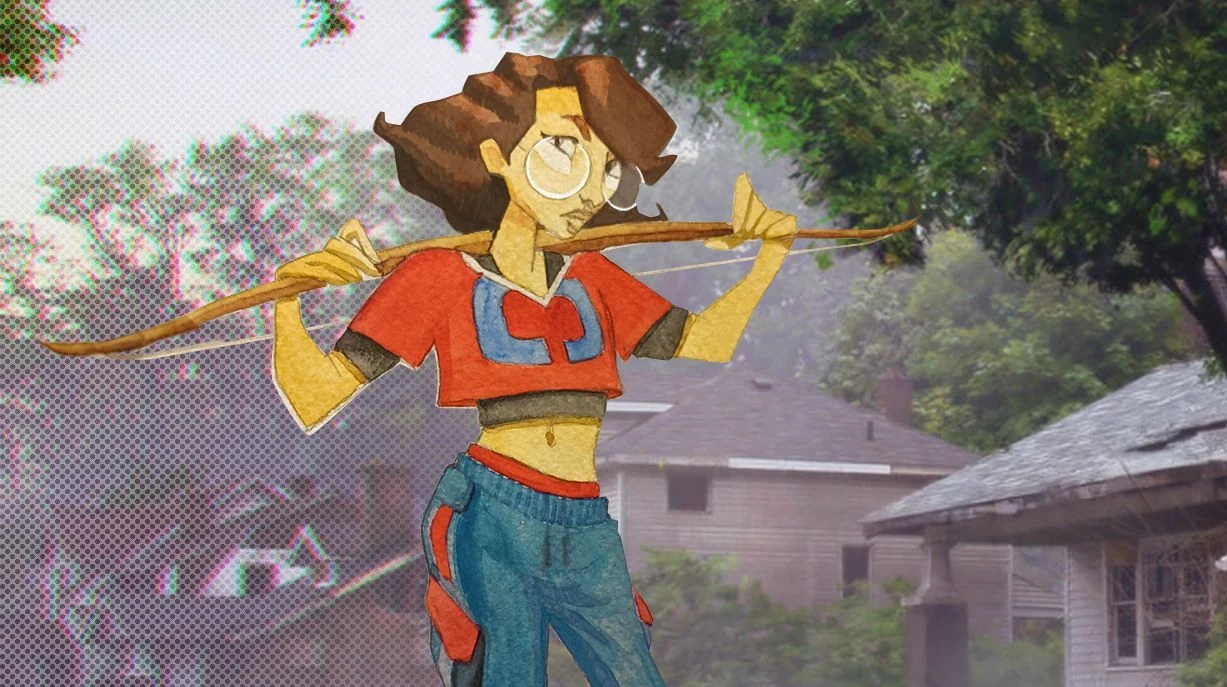
Play Ivy’s story
The last train
Ivy’s best friend, June, moves away tomorrow. They’ve saved tonight for one last basket of fries at their diner across the river. As the last train pulls in, June texts a photo of their usual booth. “Hurry. I’m eating your fries.”
Ivy has one foot on the train when a fox drops an envelope on her shoe. It trots to the platform stairs, then looks back at her. The doors chime.
TRIO grant alignment
Choose your grant to see where specific writing and programming activities fit.
Upward Bound · Conditional required core curriculum
For Upward Bound projects funded for at least two years, writing original flash fiction for a playable scene supports the composition core. 34 CFR § 645.11(b)(4)
Upward Bound Math & Science
Permissible service
When the Math & Science center includes composition in its curriculum, students practice it by writing original flash fiction for a playable scene. 34 CFR § 645.14(a) · 34 CFR § 645.11(b)(4)
Additional required service
Students practice hands-on computer science for Upward Bound Math & Science by programming a branching dialogue and testing both execution paths. 34 CFR § 645.14(a)(1)
Other connections to discuss with your TRIO partner
Upward Bound
- If game programming and testing are usually unavailable to your students, coding branching dialogue, testing a playable interaction or debugging the game can provide that academic exposure. 34 CFR § 645.12(a)
Upward Bound Math & Science
- If game programming and testing are usually unavailable to your students, coding branching dialogue, testing a playable interaction or debugging the game can provide that academic exposure. 34 CFR § 645.12(a)
Talent Search
- If game programming and testing are usually unavailable to your students, coding branching dialogue, testing a playable interaction or debugging the game can provide that academic exposure. 34 CFR § 643.4(b)(4)
Course details
Select the stages that fit your time. Programs under 9 hours focus on a skill or production stage. Plan for 1 device per student and choose the software track with your Tried & True partner.
- Game Design Foundations & Computer Setup Explain a basic game-design idea and organize the files for a starter project.
- Write a Playable Story Write a short game story with a character, a goal and an obstacle that can become a playable scene.
- Design Meaningful Choices Map at least one player choice and explain how its branches change what happens next.
- Create Characters & Visual Assets Create an original character image or placeholder asset and explain what it communicates to the player.
- Program Dialogue & Branches Program a short dialogue scene with a player choice and test both branches.
- Choose and Scope the Team Game Choose a team game idea and specify the smallest playable version the group can build in the available time.
- Plan Production & Team Responsibilities Assign production roles and sequence the team’s next tasks.
- Build the Playable Prototype Build a playable prototype with a working interaction and test it from a player’s point of view.
- Debug, Improve & Export Find and correct a problem in a game project, then export a version for review.
- Showcase & Reflect Present a prototype or game-design artifact, explain one design decision and use feedback to identify a next improvement.